Precision Removal for High-Risk Commercial Trees
Crane-assisted tree removal services in Charleston, South Carolina for large-diameter trees near buildings, roadways, and power lines.
When a tree on your commercial property in Charleston is too large, too close to a structure, or too risky to drop in sections, crane-assisted removal becomes necessary. You are dealing with trees that overhang roofs, crowd parking lots, or lean toward power lines. Ground-based cutting and rigging are not sufficient. Mikes Tree Service uses professional cranes to safely lift and remove heavy sections with precision, reducing ground impact and protecting surrounding structures.
This service includes crane-assisted removal for high-risk and large-diameter trees on commercial properties throughout Charleston. The crew coordinates crane operations with cutting and rigging to control every phase of the removal. You work with a team experienced in safety protocols, load calculations, and confined work zones where traditional methods cannot be used. The equipment and planning are designed to handle Charleston's mature oaks, pines, and other species that grow to diameters exceeding three feet and heights over eighty feet.
If your Charleston commercial property has a tree that requires crane-assisted removal, reach out to discuss site conditions and scheduling.
How Cranes Change the Way Trees are Removed
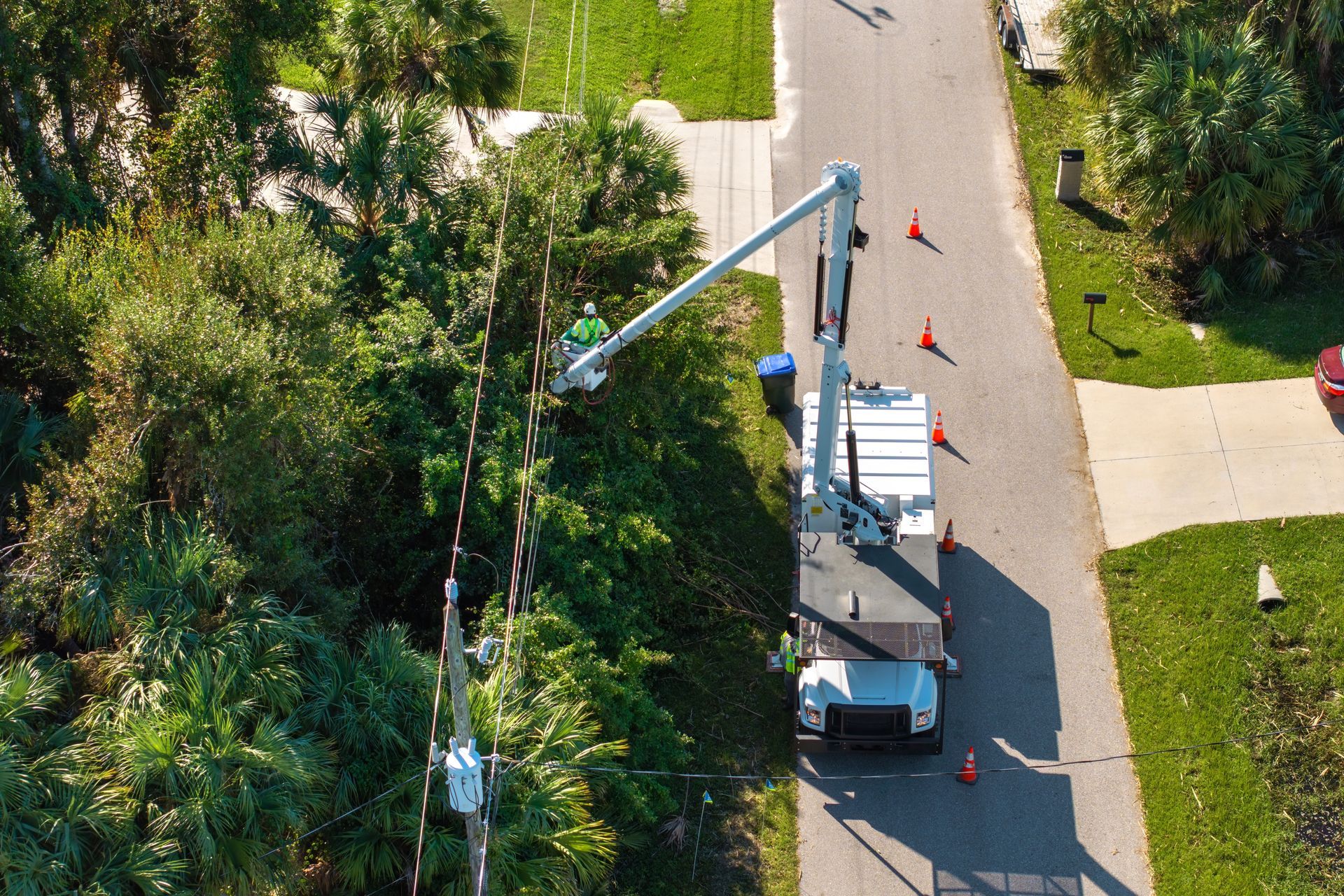
The crew arrives with a crane, rigging equipment, chainsaws, and a team trained to coordinate lifts and cuts in real time. The tree is sectioned from the top down. Each piece is cut, rigged to the crane, lifted free of the canopy, and lowered to the ground in a controlled path. In Charleston, where commercial sites often have narrow access points and structures on multiple sides, this method prevents damage to roofs, facades, and paving that would occur with conventional dropping or rigging.
When the work is finished, your property is cleared of the tree, all wood is hauled away, and the stump is either ground to grade or left for separate removal depending on your preference. You will notice that the area is open, the structure is undamaged, and the risk is eliminated. The crane allows for precision that is not possible with ground-based equipment, especially when trees are intertwined with utilities or surrounded by high-value improvements.
The service does not include grading, replanting, or repairs to structures, but it does handle all aspects of crane-coordinated removal from setup through final cleanup. If permits or utility notifications are required, those are arranged before the crane arrives. The crew works to complete the removal as quickly as site conditions and safety allow.
You Likely Have Concerns About Crane Work
What types of trees require crane-assisted removal?
Large-diameter trees near buildings, trees leaning over roadways or power lines, and trees in confined spaces where ground-based rigging is not practical are ideal candidates. Cranes are also used when speed and precision are critical to staying on schedule.
How much space is needed for the crane?
Space requirements depend on crane size and tree location. The crew evaluates access routes, overhead clearance, and ground stability during the planning phase. You are informed of any temporary closures or access restrictions before the crane is brought to the site.
What safety measures are in place during crane operations?
The crew follows industry safety protocols, including load calculations, communication systems, and exclusion zones around the crane and tree. All personnel are trained in crane-assisted operations, and the work is coordinated to protect people and property throughout the removal.
How long does crane-assisted removal take?
Most single-tree crane removals are completed in a half day to a full day, depending on tree size and complexity. Multi-tree projects or sites with restricted access may take longer, but the crane speeds the process significantly compared to conventional methods.
What happens if the tree is tangled in power lines?
The crew coordinates with utility companies to de-energize or relocate lines before starting work. The crane is positioned to lift sections clear of the lines once it is safe to proceed. All utility coordination is handled during the planning phase.